

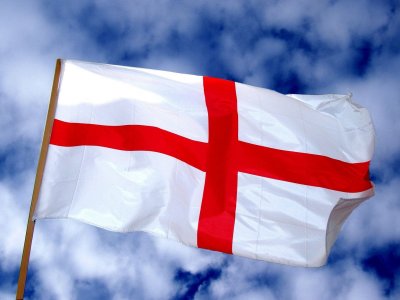
ON CHRISTIAN NATIONALISM TODAY
The story of Jesus and Pilate eyeball to eyeball just before his crucifixion says something vital about the world unfolding around us today.
This was the first time Jesus had come face to face with Roman rule. There was a sense of inevitability about this moment. The power and charisma of Jesus were always going to put him on collision course with Rome, but knowing the story from the end like we do, it’s easy to miss what could have happened here. What if Jesus had struck a deal with Pilate to save himself? Rome was obsessed with power, and Jesus had it in spades. He had loyal followers among a minority ethnic group that Rome struggled with, and incomparable peace-building skills. But this soft power was matched by a mysterious hard power. Someone who could walk on water, raise the dead, heal wounds and supply food from nowhere to over-extended military supply lines would have made Jesus less an elite soldier and more a one man army. Jesus plus Rome would have changed the history of the world in a very different manner to the way Jesus did by submitting to his brutal crucifixion.
Jesus’ mind had already been made up in the wilderness, of course, when Satan tempted him to become the kind of despotic ruler whom people cringe before in fear. Once he resisted this temptation, the road to Calvary opened up. My kingdom is not of this world, he said to Pilate. And yet history is made up of rulers and nations who want to join the kingdom of God to the kingdoms of this world. We are seeing it today in the emergence of chauvinistic Christian nationalism, where the Gospel is dissolved into trenchant political agendas.
It is in the ascendency in circles of power in the United States and we are seeing elements of it here, too. People who claim the title of ‘cultural Christian’ and do so because they prefer to be surrounded by the trappings of Christianity, who are often vague about its core beliefs but who nevertheless loudly claim that people like me have sold out the Church to failed liberal agendas. And there has been a surprising synergy with Russian Orthodox nationalism. Each manifestation tends towards misogyny, homophobia and the intolerance of minorities. It idolises strength – especially masculine strength – over law. And it has a slippery relationship with truth, which becomes what you need it to be in the moment.
I know the measure you give is the measure you receive and we all stand in the light of Christ which exposes our personal shortcomings. That calls for honesty and self-awareness. And it also asks for a radical openness to scripture, which judges the thoughts and intentions of the heart, as the writer to the Hebrews says. These scriptures have a beat to them entirely at odds with the Roman world in which they were created. They seem to prefer weakness to strength, the vulnerable to the powerful, the poor to the rich; those who have lost out in this world because the cards were always stacked against them. The Czech president and philosopher, Vaclav Havel said that the mark of a nation is how well it treats its minorities. Havel didn’t identify as a Christian, but I have hardly come across a better description of a nation that aspires to live in the character of God. And it is one at odds with the strongman creed that has wrapped itself round us like weeds.
Across the UK, it seems that God is doing a new thing. We don’t really know the extent of it but there are encouraging signs that people are seeing through the creed of materialism that has been recited across our media daily for decades. As people turn to Christ we face the ageless call to help people become disciples on the way. This cannot be Bible-lite and Sunday only, and in today’s climate there is a risk some of this could take on the shape of Jesus plus Rome.
The Church of Christ is big and broad and has so much variety that we could never agree between us politically, but there are boundaries within which we might disagree. The problem is: these boundaries seem to be moving. The so called Overton window is an acceptable window within which ideas and policies can be spoken about without the speaker being written off for being too extreme. Opinions that were once considered outside that window are edging their way into the picture. Extremism is mainstreaming, one idea after another. If this is happening in society, it will be happening in the thinking of people inside church, too. So, a big part of forming disciples is how we figure out the transformation of our minds.
I wonder, too, if in the time ahead we will need to be bolder in our prophetic calling? Some allege the Church has lost its entitlement to prophesy because of its own failings. But while the risk of hypocrisy is very real, the role of prophecy is to speak up for those who have no voice. If we give up on our prophetic calling, we give up on the vulnerable of the world, too. That can’t be right. But prophecy is a boomerang: we can throw it out to hit a target; we just have to accept it will fly back to hit us between the eyes as well. It is a challenge for me, personally, because I am in a comfortable majority on just about every front, and worry I sometimes miss the chronic emotional and spiritual pain that others live with.
The tone in which we speak into this polarising culture is critical. Romans 12 offers us a remit: love one another with mutual affection; outdo one another in showing honour. The author Peter Pomerantsev, reflecting on the war in Ukraine - where one side is utterly brutal and cruel and the other tries harder to be civilised - calls this ‘the agony of human rights’. People who want to treat others properly but who get punched in the face in return. Public conversation feels like this now, but as image bearers of Christ we have to treat others well if we are to bear witness to a better culture. Building on Peter Pomerantsev, we might call this ‘the agony of Christian faith’.
In his last hours Jesus was literally punched in the face while he continued to act with dignity. Those who bear witness to the kingdom that is not of this world do so by speaking up for those who have no voice in the kingdoms of this world. Joseph Stalin once cynically said: how many divisions does the Pope have? Hard power is calculated in weapons. Spiritual power is measured in weakness. We should never confuse the two.
POPULAR ARTICLES

God In The Cow Shed
2020 has been dominated by the C word. Not that C word. I mean conspiracy theory involve space. Some people believe the
Viral With The Holy Spirit
Since the tech revolution, insurgent new start-ups have enjoyed using the word ‘disruption’
Long Lost family
Some types of storytelling mess with your brain. Intentionally. Like one of those novels where you assume

Valuing Age
Lots of work is being done round unconscious bias in society, especially around gender and ethnicity